Executive Overview
Running a growing business in Bangladesh—whether managing a rapidly expanding e-commerce brand in Dhaka, a manufacturing plant in Gazipur, or a logistics network stretching across Chittagong—brings a common enemy: operational chaos.
In the early stages, WhatsApp groups, Google Sheets, and basic accounting tools might suffice. However, as teams expand, inventory mismatches occur, invoices fall through the cracks, and tracking employee attendance across multiple branches becomes a nightmare. Implementing a localized, scalable Enterprise Resource Planning (ERP) system transitions a business from chaotic spreadsheets to streamlined automation.
The Unique Challenges of Bangladeshi Businesses
A generic global ERP solution often fails in Bangladesh unless properly customized. Local enterprises have distinct structural and architectural requirements that must be met:
- NBR Tax & VAT Compliance: The software must natively handle complex tax slabs, source tax deductions (AIT/VDS), and automated VAT reporting required by the National Board of Revenue (NBR).
- Local Payment Gateway Integration: Seamless connections to mobile financial services like bKash and Nagad, alongside local banking APIs (via platforms like SSLCOMMERZ or Shurjopay), are mandatory for modern B2B and B2C workflows.
- Multi-Location Operations: Real-time data synchronization is essential between corporate head offices based in commercial hubs like Gulshan and factories or warehouses located outside the city.
Top ERP Software Options in Bangladesh
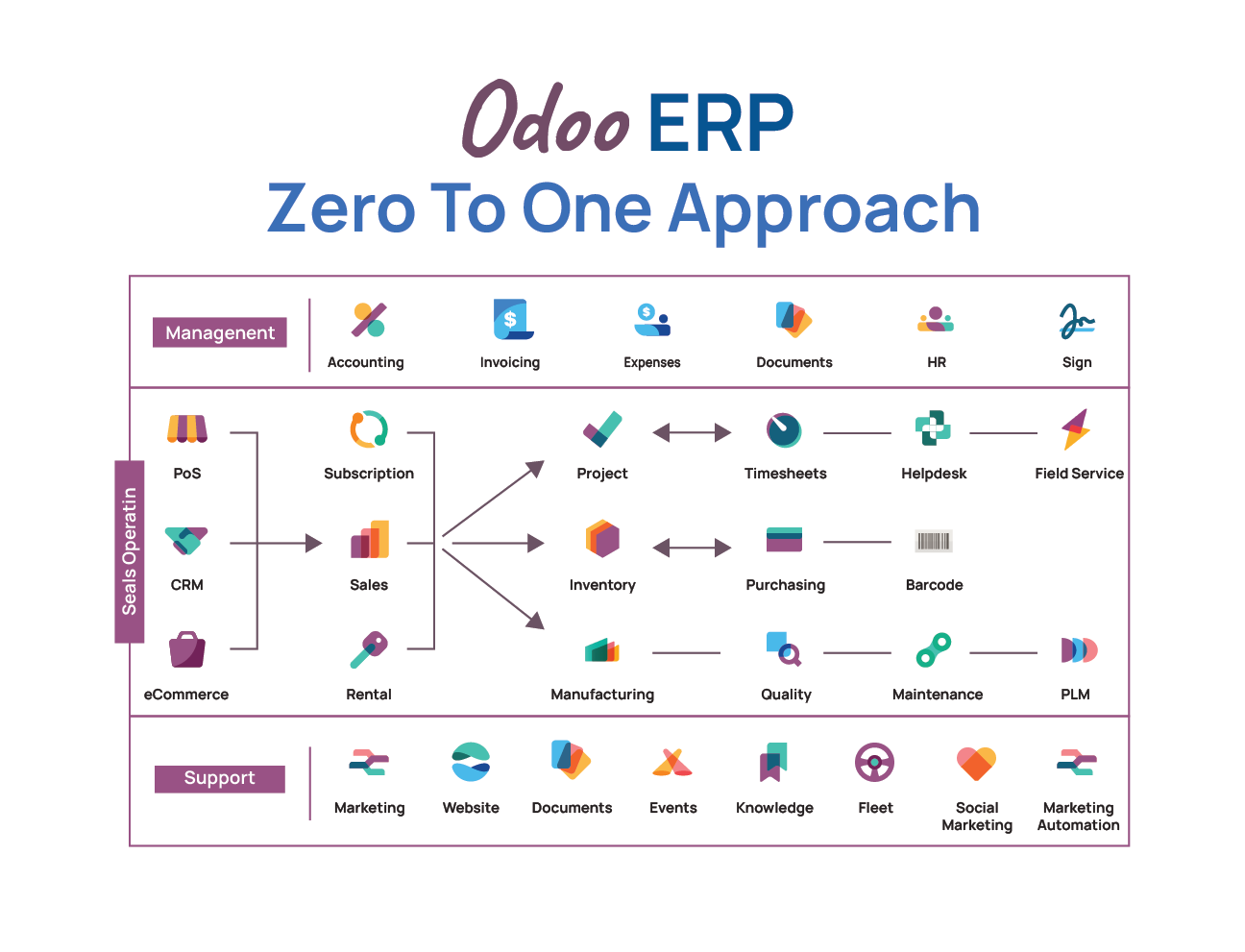
1. Odoo ERP (The Best All-Rounder for SMEs)
- Pros: Highly customizable, features a modern user interface, offers a lower total cost of ownership, and provides access to a vast global marketplace of pre-built applications.
- Cons: Requires proper initial configuration and structure by a certified expert.
- Best Suited For: Agile, growing businesses, trading companies, manufacturing plants, retail chains, and tech startups looking to minimize licensing overhead.
2. SAP S/4HANA or Oracle (The Corporate Giants)
- Pros: Highly robust, reliable, and designed to enforce rigid operational processes across massive workforces.
- Cons: Implementation costs routinely cross tens of millions of BDT, and deployment timelines can easily take up to a year.
- Best Suited For: Massive conglomerates with thousands of users and fixed, unyielding enterprise operations.
3. Bespoke (Custom-Built) ERP Systems
- Pros: Handcrafted by local software agencies to fit your exact current operational rules.
- Cons: High long-term maintenance costs, extreme risk of developer lock-in, and a distinct lack of immediate scalability when your business model shifts.
⚠️ The Reality of ERP Implementation: Industry data shows that up to 70% of ERP implementations fail globally. This rarely happens because the software itself is flawed, but rather because businesses hire generic developers instead of certified implementation partners. An ERP integration is a fundamental business transformation, not just an isolated IT project.
3 Rules for a Successful ERP Rollout
- Clean Your Data First: Never migrate messy, unverified inventory sheets or chaotic databases into a brand-new system. Deduplicate and audit your records before migration begins.
- Phase the Implementation: Do not attempt to launch Accounts, HR, CRM, and Supply Chain all on day one. Start by automating your biggest operational bottleneck (usually Inventory or Accounts) and expand outward sequentially.
- Prioritize Team Training: Organizational change management is difficult. Ensure that department managers receive dedicated, hand-holding support during the first 30 days of the new platform launch to guarantee system adoption.
Final Verdict
For massive enterprises with deep pockets and rigid structures, legacy systems like SAP remain the standard. However, for agile, growing businesses in Bangladesh aiming to automate fast, optimize their workflows, and maintain the flexibility to scale, Odoo ERP (deployed by a local specialist team like Codexaa Software Limited) represents the absolute best long-term investment for business growth.